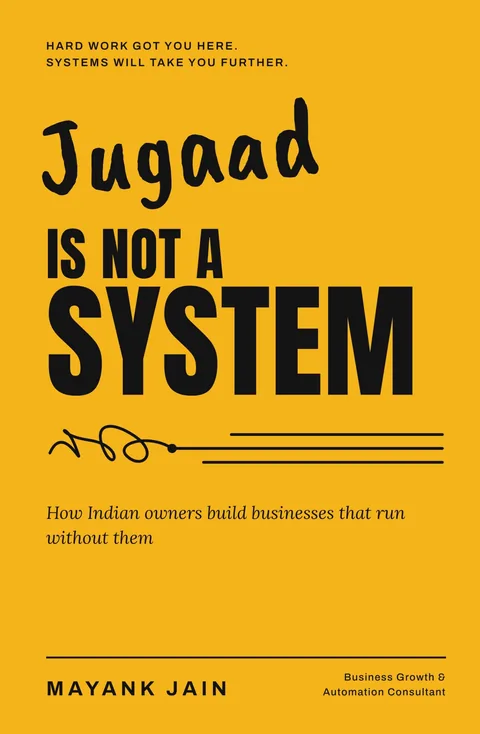
Starting a business in India is hard, but staying in business is far harder. Plenty of capable, hard-working owners shut shop not because their idea was bad, but because of avoidable mistakes that quietly pile up month after month until they become fatal. Understanding why MSMEs fail in India is the first and most important step to making sure yours does not become another statistic. As an MSME business consultant who has sat across the table from hundreds of owners, I can tell you the failure patterns are remarkably consistent and rarely about bad luck. The genuinely good news is that almost every one of them is preventable once you can see it coming. Here are the top ten reasons small businesses fail in India, and exactly how you can avoid each one in your own business.
1. No Clarity on Numbers
Many owners run their entire business on feel. They know sales are happening but cannot tell you their real profit margin, their cost to acquire a customer, or their actual cash position this week. Without numbers, you are flying blind in fog, and you will not see trouble until you have already hit it. The fix is simple but requires discipline: track a handful of key figures every week and let data, not mood, drive your decisions. Owners who measure consistently almost always outlast those who guess.
2. Cash Flow Mismanagement
Profit on paper means nothing if there is no money in the bank to pay salaries and suppliers on time. Late receivables, overstocked inventory, and aggressive expansion drain cash faster than most owners expect. A business can be profitable and still die of a cash heart attack. Watch your cash flow more closely than your revenue, chase payments promptly and without embarrassment, keep a buffer for lean months, and never confuse a busy month with a healthy one.
3. Over-Dependence on the Owner
When the business cannot function for even a week without you, you do not own a business, you own a very demanding job that you can never leave. This is one of the most common traps in Indian businesses, where the founder is also the salesperson, the manager, and the problem-solver. Build a team and document processes so the company keeps running without your constant presence. Learning to reduce team dependency in your business is not a luxury, it is essential to survival and to your own sanity.
4. Weak or Inconsistent Sales
Relying only on referrals and repeat customers feels safe until the day those suddenly dry up. Many businesses never build a predictable system to bring in fresh leads, so their revenue lurches between feast and famine. Treat sales as a deliberate process: capture every lead, follow up fast, nurture the ones who are not ready, and measure your conversions at each stage. A consistent pipeline is what separates stable, confident businesses from fragile ones living order to order.
5. Ignoring Marketing
Plenty of excellent small businesses stay completely invisible because the owner believes good work markets itself. It does not, at least not fast enough. Today, customers search online before they buy almost anything, and if you are not present where they look, you are silently losing them to competitors who are. You do not need a huge budget; even a basic, consistent digital presence compounds powerfully over time and slowly builds a reputation that brings leads to you.
6. No Systems or Processes
When everything depends on individual memory and improvisation, quality slips and the same mistakes repeat endlessly. The absence of documented systems is a silent killer for growing businesses, because problems that were manageable at small scale become unmanageable at larger scale. Write down how core tasks are done, then standardise and steadily improve them. Systems turn an unpredictable, stressful operation into a reliable one that delivers the same quality whether or not you are watching.
7. Poor Hiring and High Attrition
Hiring in a hurry and without structure leads to wrong fits, low productivity, and constant churn that bleeds time and money. Each bad hire is expensive in salary, in training, and in the disruption left behind. Define the role clearly before you advertise it, hire for attitude as much as for skill, and invest properly in onboarding so people succeed. A stable, well-trained team is one of your biggest and most underrated competitive advantages in a market where good people are scarce.
8. Trying to Do Everything Manually
As volume grows, manual follow-ups, data entry, and reminders eat your team alive and quietly invite costly errors. Refusing to automate keeps you permanently small and permanently busy. Identify the repetitive, rule-based tasks and let technology handle them reliably and tirelessly. Many owners only realise how much time they were wasting after attending a business automation workshop and seeing how a few simple automations free up entire days each week for higher-value work.
9. No Focus on Profitability
Chasing top-line revenue while ignoring margins is a fast and tempting route to trouble. More sales at thin or negative margins simply means losing money faster and more impressively. Know the true profitability of every product, every service, and even every customer, because some of your busiest accounts may be quietly unprofitable. Sometimes the healthiest, bravest move is to fire loss-making work and focus your energy on what actually pays you well.
10. Refusing to Seek Help
Pride keeps many owners stuck longer than any market condition. They try to solve every problem entirely alone, repeating expensive mistakes that an experienced outsider would have spotted in a single conversation. Seeking guidance is not weakness, it is leverage, and the most successful owners use it deliberately. If you are unsure whether you genuinely need support, our guide to business consultants explains exactly when outside help pays for itself many times over.
How It Typically Works
An example (illustrative, not a client result): a hypothetical business and round numbers to show the arithmetic.
Say a trading business sells ₹50 lakh a month and its customers take 90 days to pay instead of the agreed 45. At any time about ₹1.5 crore (three months of sales) sits with customers, instead of about ₹75 lakh (a month and a half). That ₹75 lakh gap is often exactly the loan the owner is trying to raise.
Bring collections back to 45 days with a written credit policy and reminders that go out on time, and that cash comes back without a single new sale. Then check margin by product line: if two lines sell below their true cost, every extra sale of them makes the cash problem worse. The exact numbers will differ in your business. The point is that a business can look like it needs a loan when it actually needs a receivables list and a margin check.
How to Build a Failure-Proof Business
Notice the common thread running through every reason above: clarity, systems, and discipline. Businesses do not usually fail from one dramatic event; they fail from many small, ignored weaknesses compounding over time. So build the opposite habits. Review your numbers weekly, document your processes, keep a cash buffer, market consistently, automate the boring work, and surround yourself with honest advice. None of this is glamorous, but it is exactly what separates the businesses that last from the ones that quietly disappear.
It also helps to schedule a brutally honest review of your own business against this list every few months. Pick the two or three reasons that feel closest to home and fix those first, rather than trying to address everything at once and achieving nothing. Most owners already sense where their weak spots are; they simply avoid looking directly at them because it is uncomfortable. Facing them early, while they are still small and cheap to fix, is the single most powerful thing you can do to protect the business you have worked so hard to build.
Remember too that none of these failures happen in isolation. Weak numbers lead to poor cash decisions; over-dependence on the owner leads to weak systems; ignoring marketing leads to inconsistent sales. Fix one root cause and several symptoms often improve together. That is why owners who commit to clarity and systems tend to see compounding gains rather than one-off fixes.
Conclusion
Failure rarely arrives suddenly. It builds slowly through ignored numbers, weak systems, and avoidable habits that everyone assumes they will fix later. The encouraging truth is that every single reason on this list is well within your control starting today. Track your finances, build systems, market consistently, automate the repetitive work, protect your margins, and ask for help before problems compound. Understanding why businesses fail is really just a checklist of what to fix in your own business right now. If you want an experienced second opinion, explore my consulting services, read more on the blog, or book a free business consultation to catch your blind spots early, while they are still cheap to fix.